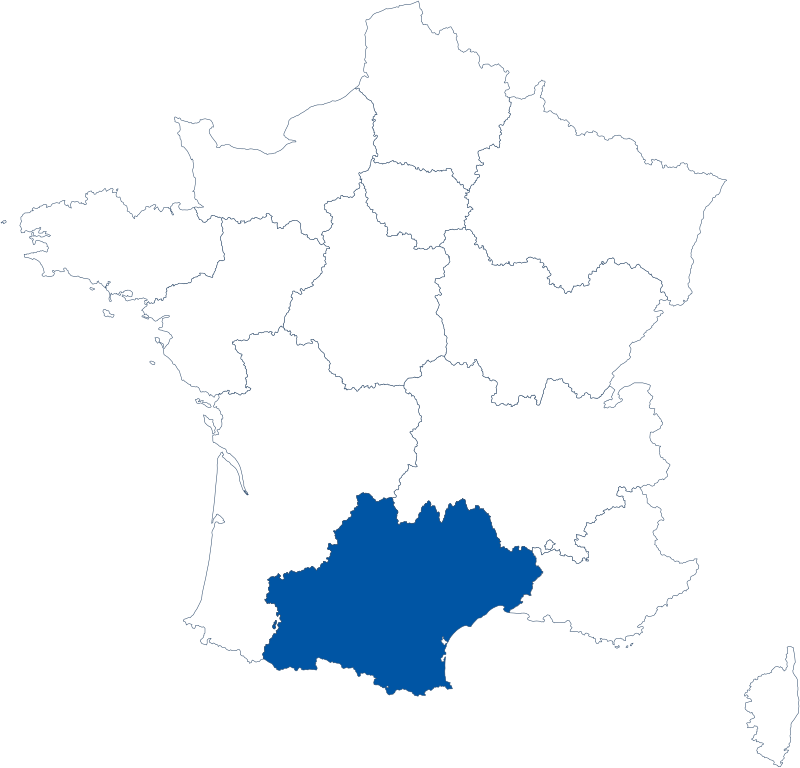
452 English-speaking jobs in Occitania
PLM Project Manager - (f/h)
- AIRBUS OPERATIONS SAS
- toulouse
- September 29
PLM Project Manager to manage the Digital Product portfolio and cross-PSL epics. This role ensures seamless, compliant, and secure data flows across functions, adhering to global export control regulations.
Multi-Sensor Data Fusion Designer (f/m) (H/F)
- AIRBUS OPERATIONS SAS
- toulouse
- September 29
Multi-Sensor Data Fusion Designer to prepare future CNS architectures and technologies. Responsibilities include defining, designing, and integrating data fusion functions for various programs. Collaboration across multi-disciplinary teams is key.
General Accounting & Accounts Payable F/M/X
- Mars
- aimargues
- September 28
This role covers General Accounting and Accounts Payable duties to support a transformation project. Responsibilities include ledger maintenance, period-end closing, invoice processing, and vendor reconciliations.
Aircraft Control -Test engineer (H/F)
- AIRBUS OPERATIONS SAS
- toulouse
- September 28
Aircraft Control Test Engineer joins Control Modelling, Simulation & V&V. Coordinate maturity testing of Aircraft control systems (Auto-flight ATA22, Flight Control ATA27) on a simulated platform.
Independent Real Estate Portfolio Manager
- Jobtailor
- Tarbes
- September 28
- no experience
Manage a real estate portfolio by identifying and securing properties. Coordinate cleaning, maintenance, and owner/guest relations. This autonomous role requires strong persuasion, flexibility, and organizational skills.
Machine Learning Engineer, Outmax
- Perion Network Ltd
- montpellier
- September 27
Build and deploy bid optimization ML pipelines and develop production-grade backend services. This hands-on role requires 3+ years of experience in ML, data science, or backend engineering with strong Python skills.
Global Sustainability Demand Manager M/F/X Mars
- FSLCI
- montpellier
- September 27
Lead the global sustainability agenda for Demand, translating sustainability into commercial value. Own the roadmap, portfolio choices, and communication strategy across the demand function. Requires 8+ years of business experience and sustainability literacy.
Senior Manager, HR AI Strategy & Governance
- Yahoo
- uz
- September 27
Senior Manager, HR AI Strategy & Governance, will set the HR AI roadmap, manage governance, and guide AI solutions. This role requires 8+ years in HR tech or product management, experience with AI roadmaps, and knowledge of AI governance.
Founding Growth Marketer
- The Flex
- nîmes
- September 27
- no experience
Founding Growth Marketer to build the growth engine for an AI operating system for short-term rentals. Own growth channels end-to-end, driving qualified leads and demo bookings through paid ads, SEO, and more.
Data Analyst
- Tata Technologies Ltd.
- toulouse
- September 27
Data Analyst needed to support data-driven decision-making using Palantir Foundry within the Airbus digital ecosystem. Responsibilities include developing analytical solutions, maintaining data pipelines, and creating visualizations. Requires a relevant degree and strong SQL/Python skills.
Embedded Software Development Engineer (f/m) (H/F)
- AIRBUS OPERATIONS SAS
- toulouse
- September 27
Embedded Software Development Engineer to join the Avionics Software department. Responsible for end-to-end development of real-time avionics software, adhering to airworthiness regulations like DO178B/C.
Process Owner Delegate Support for all Test Means processes. (m/f) (H/F)
- AIRBUS OPERATIONS SAS
- toulouse
- September 27
Support the Process Owner Delegate for all Test Means processes, coordinating strategic transverse activities including financial, methods, and safety. Define, manage, and improve end-to-end processes while managing stakeholders and subcontractors.
Flight Control & Autopilot Systems Testing Engineer (m/f) (H/F)
- AIRBUS OPERATIONS SAS
- toulouse
- September 27
Flight Control & Autopilot Systems Testing Engineer to perform integration testing for Flight Control (ATA 27) and Autopilot (ATA 22) systems. Tasks include defining test procedures, performing tests on benches/simulators, and analyzing results. Requires 3-6 years of experience.
Project Leader Building & Construction (M/F) (H/F)
- AIRBUS OPERATIONS SAS
- toulouse
- September 27
Project Leader Building & Construction will lead strategic and medium projects shaping the footprint of the "Grand Saint Martin" & Blagnac sites for Airbus. This role supports FMRE in organizational development and drives process improvement.
Automation Engineer for Commissioning & Improvement
- Water Horizon
- toulouse
- September 26
Automation Engineer will assist in the technological development of new industrial units, optimizing processes through industrial-scale process automation. Responsibilities include participating in PID scheme studies, defining control architectures, implementing technical solutions, and performing functional analyses.
Accounts Receivable F/M/X
- Mars, Incorporated and its Affiliates
- aimargues
- September 26
Manage Accounts Receivable and cash collection for EKA, ensuring accurate accounts and timely payments. Support the AR Financing program and VAT processes. Experience in financial operations is necessary.
Global Regulatory Innovation Manager H/F/X
- Mars, Incorporated and its Affiliates
- aimargues
- September 26
Global Regulatory Innovation Manager ensures product compliance by embedding regulatory requirements into new product design. This role acts as the regulatory lead for renovation and compliance projects, collaborating across global teams. Requires an M.S. in life sciences and 6+ years of professional experience, including 3 years in Regulatory Affairs.
Food Safety Management Systems Lead
- Mars, Incorporated and its Affiliates
- aimargues
- September 26
Lead global governance and continuous improvement of Food Safety Management Systems across Mars Petcare. Drive compliance with FSSC 22000, HACCP, GMP, Food Fraud, and Food Defense standards. Requires strong experience in manufacturing food safety.
Financial Controller F/M/X
- Mars, Incorporated and its Affiliates
- aimargues
- September 26
Lead financial operations, ensuring reporting accuracy, compliance, and internal controls. Support CFO and Business Partners on optimizing unit KPIs, focusing on Overheads and Cash flow. Requires a Master's degree or accounting qualification and significant experience in financial operations.
Dermatology Research Scientist H/F/X
- Mars, Incorporated and its Affiliates
- aimargues
- September 26
Dermatology Research Scientist to identify innovative skin health solutions for pets. Requires Master's/PhD in Dermatology/Immunology and 2+ years in R&D. Focus on skin barrier function and nutrition.
Occitania
Occitanie